Which estonian architecture? / Milline eesti
arhitektuur?
Propuesta presentada para el concurso curatorial para la Bienal de Arquitectura de Tallin 2022
Head curator: Oscar Aceves Alvarez.
Curatorial team: Oscar Aceves Álvarez, Linda Schilling, Beatriz Coeffé, Jorge Herrera, Oscar Rodríguez, Daniel Otero, Khistian Ceballos, Karin Paulus.
¿Cuál arquitectura estonia? / Which Estonian architecture?
Mark Wigley propone que los arquitectos, más que constructores son habladores: «Los arquitectos no hacen objetos sólidos. Ellos hacen discursos sobre los objetos». Esto toma particular relevancia si vinculamos esto con la propuesta de discurso del Michel Foucault, quien plantea que estos consisten en una serie de enunciados o planteamientos que comunican una cierta idea y que definen todo lo que puede ser dicho sobre un tema a partir de la conformación de una forma particular de entender la realidad; los discursos entonces no son solo un glosario particular de palabras, pues más bien abarcan los significados o ideologías planteados por medio de éstas. En este sentido, la propia arquitectura puede ser entendida como un gran discurso en el cual a su vez pueden operan una variedad infinita de discursos. La propuesta curatorial ¿Cuál arquitectura estonia? tiene como objetivo principal reflexionar sobre la performatividad de la arquitectura contemporánea en Estonia a través de una revisión de los discursos utilizados por los arquitectos locales para describir, justificar y/o valorar aquellas obras desarrolladas durante el denominado boom económico estonio del siglo XXI. Entendiendo que este tipo de eventos tienen la capacidad de reunir arquitectos, estudiantes, autoridades y ciudadanos, la bienal no solo debe presentar las obras más relevantes construidas en el país en los últimos años, sino también generar una discusión que reflexione sobre cuáles son los temas o intenciones de los discursos a partir de los cuales podemos hablar de una o varias arquitecturas estonias actuales, durante la cuarentena covid-19, y en el futuro próximo. Hablar sobre esto podría ayudar a comprender la presencia o ausencia de obras locales dentro del debate internacional arquitectónico, o incluso de otras disciplinas.
Mark Wigley proposes that architects are talkers rather than builders: «Architects do not make solid objects. They make discourses about objects.» This becomes particularly relevant if we link this with Michel Foucault’s proposal for discourse, who states that these consist of a series of statements or approaches that communicate a certain idea and define everything that can be said about a topic from the conformation in a particular way of understanding reality; Discourses, then, are not just a particular glossary of words, they also consist of the meanings or ideologies raised through them. In this sense, architecture itself can be understood as a great discourse in which an infinite variety of discourses can operate. The main objective of Which Estonian architecture? curatorial proposal is to debate about the performativity of contemporary architecture in Estonia through a review of the discourses used by local architects to describe, justify and / or value those works developed during the estonian economic boom of the 21st century. Understanding that these types of events have the ability to bring together architects, students, authorities and citizens, the biennial must not only present the most relevant works built in the country in recent years, but also generate a discussion that – taking methodologies from the analysis of the enunciation – debate on what are the themes or intentions of the discourses from which we can talk about various current, during covid-19 quarantine, and in the near future Estonian architectures. Talking about this could help to understand the presence or absence of local works within the international architectural debate, or even from other disciplines.

Fahle House. koko Architects. 2007. Tartu mnt 84a, Tallinn. estonianarchitecture.com
A finales del siglo XX era recurrente que la disciplina identificara y valorara diferentes producciones arquitectónicas basadas en su condición regional e incluso nacional: la arquitectura catalana de los 80’s, la arquitectura de Ticino de los 80’s, la chilena de los 90’s arquitectura o la arquitectura colombiana de los años 00’s. En estos casos, el debate se centró en la posibilidad de que diferentes arquitectos pudieran generar no solo una producción arquitectónica con suficientes puntos en común a nivel forma, material o incluso tipológico, sino un discurso o una serie de estos que lograran catalogar una práctica asociada con su contexto geográfico, social o cultural. Por esta razón, la disciplina podría referirse a la producción arquitectónica de un pequeño país ubicado junto al mar Báltico como arquitectura estonia; Pero más allá de la condición geográfica, ¿qué queremos decir cuando hablamos de arquitectura estonia, y específicamente durante el siglo XXI?
A partir del reciente boom económico en Estonia, la producción arquitectónica se refiere el diseño de edificios de oficinas, comerciales, públicos o residenciales, incluyendo proyectos de paisajismo y planeamiento urbano. Todas estas obras tienen un gran despliegue de formas, materialidades y espacialidades que muestran las habilidades en diseño arquitectónico de sus autores. Pero, ¿Algo hay además del diseño? ¿Existe la intención de diseñar edificios sustentables, explorar posibilidades materiales, revisitar tipologías tradicionales, conformar nuevos medios de representación, crear experiencias o propiciar valores sociales? Si nosotros revisamos los discursos -quizás inconscientes- de sus autores podríamos notar que la Fahle House de KOKO Architects -un edificio multiprograma de alto costo- podría tener más en común con el Orjaku Harbour Building de KAMP Architects -un pequeño edificio de equipamiento- de lo que creemos.
In this sense, at the end of the 20th century it was recurrent that the discipline identified and valued different architectural productions based on their regional and even national condition: 80´s Catalan architecture, 80´s Ticino, 90´s Chilean architecture or 00´s Colombian architecture. In these cases, the debate focused on the possibility that different architects could generate not only an architectural production with enough points in common at the form, material or even typological level, but a discourse or a series of these that managed to catalog a practice associated with its geographical, social or cultural context. For this reason, the discipline could refer to the architectural production of a small country located by the Baltic Sea as Estonian architecture; But beyond the geographical condition, what do we mean when we talk about Estonian architecture, and specifically during the 21st century?
With the recent economic boom in Estonia, architectural production refers to the design of office, commercial, public or residential buildings, including landscaping and urban planning projects. All these works have a great display of forms, materials and spatialities that show the architectural design skills of their authors. But, is there something besides the design? Is there an intention to design sustainable buildings, explore material possibilities, revisit traditional typologies, create experiences or promote social values? If we review the speeches – perhaps unconscious – of its authors we could notice that the Fahle House by KOKO Architects – a high-cost multiprogram building – could have more in common with the Orjaku Harbor Building by KAMP Architects – a small equipment building – what we believe.
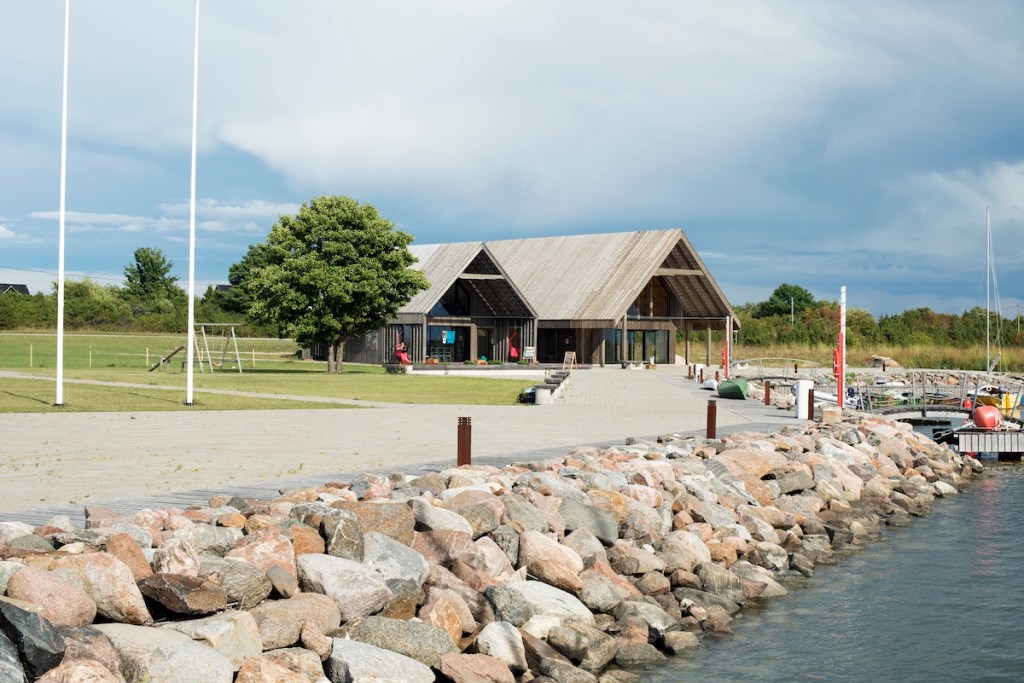
Orjaku Harbour Building. kamp Architects. 2013. Orjaku, Hiiumaa. estonianarchitecture.com
Dicho esto, el planteamiento sobre el cual se fundamenta esta propuesta curatorial coincidente con lo propuesto por Wigley. Pragmáticamente hablando, las obras son solo construcciones que, si bien tienen la capacidad de ser medidas y descritas, es gracias a la implementación de discursos a partir de estas que los arquitectos les otorgamos un significado. ¿Por qué construimos edificios y ciudades, más allá del requerimiento de un encargo? Lo ‘que se dice’ sobre una obra a través de sus medios de representación es también parte de ella.
Bajo la hipótesis de que siempre van a existir discursos a partir de los cuales se proponga justificar la arquitectura, y que por lo tanto una manera de aproximarse al estudio de ésta sería a partir de las estrategias discursivas que ocupamos los arquitectos, esta propuesta curatorial no busca atacar o descalificar estrategias discursivas sino más bien analizar la manera en que operan los discursos en el escenario arquitectónico estonio contemporáneo, pues esto puede conformar otra interpretación de la producción arquitectónica local y de su presencia o ausencia en los debates contemporáneos internacionales.
So this curatorial proposal coincides with Wigley’s approach. Pragmatically speaking, buildings are only constructions that, if they have the capacity to be measured and described, it is through the implementation of discourses that we architects give them meaning. Why do we build buildings, beyond the requirement of a commission? What is said about a work is also part of it.
Under the hypothesis that there will always be discourses from which we can justify architecture, and therefore a way to approach the study of it would be from the discursive strategies that architects occupy, this curatorial proposal does not seek to attack or to disqualify discursive strategies but rather to analyze the way in which discourses operate in the contemporary Estonian architectural setting, because this may generate another interpretation of local architectural production and its presence or absence in contemporary international debates.
Exhibición curatorial: Arquitectura en Estonia: temas e intenciones
Curatorial exhibition: Architecture in Estonia: themes and intentions
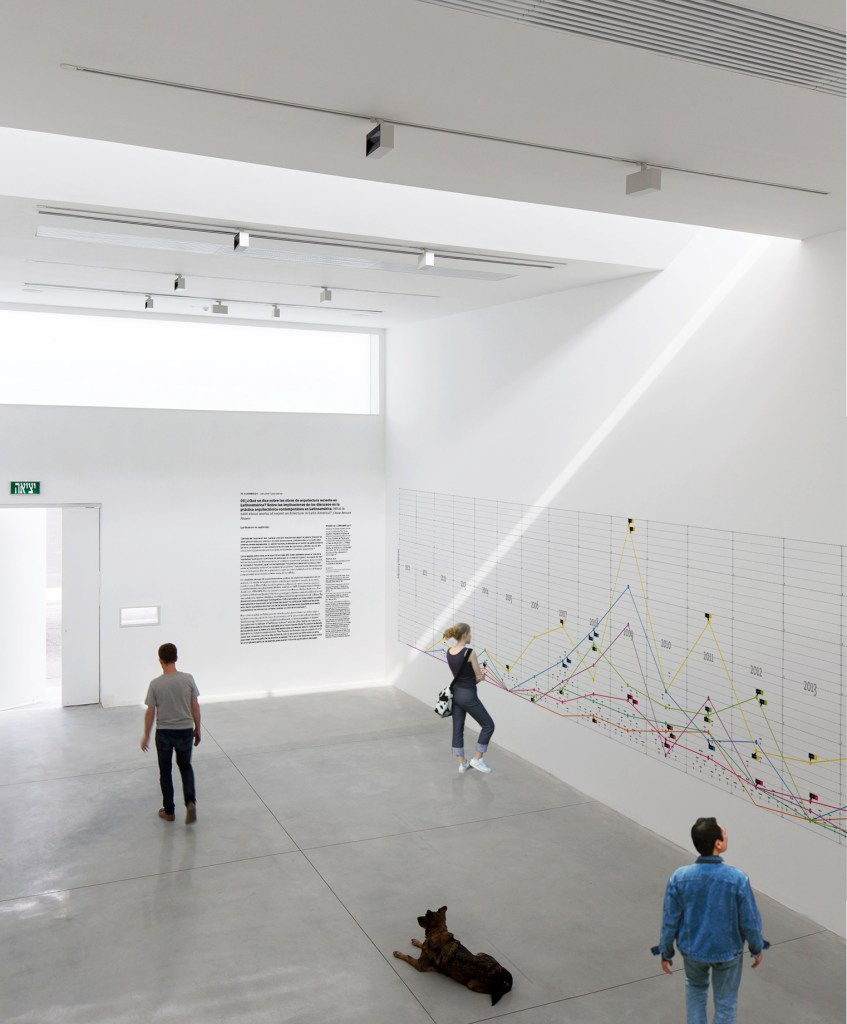
La exhibición curatorial se propone como una extensión de la convocatoria de obras, proyectos, publicaciones e investigaciones. La convocatoria principal estará abierta para edificios comerciales, residenciales, institucionales, o de equipamiento, intervenciones patrimoniales, e incluso obras de diseño interior construidas en los últimos cuatro años en estonia. Las postulaciones de obras recibidas serán revisadas por el equipo curatorial y un grupo se asesores con la intención de analizar discursos, tematizaciones e intencionalidades explicitas o implícitas de las obras. Este análisis será presentado en la exhibición curatorial a través de diagramas, gráficos, esquemas, etc. que propicien una lectura transversal de la exhibición de obras. El objetivo principal de la exhibición curatorial será mostrar a los visitantes una visión general de las particularidades, relaciones, diferencias, recurrencias o ausencias entre los discursos de la producción arquitectónica contemporánea en Estonia. Tal vez esto revele información ya conocida por el contexto local, pero seguramente ofrecerá otras maneras de entender las implicaciones o relevancia de las obras presentadas en la bienal. El contenido de esta exhibición alimentará las conversaciones del simposio.
The curatorial exhibition is proposed as an extension of the call for works, projects, publications and research. The main call will be open for commercial, residential, institutional or equipment buildings, heritage interventions, and even interior design works built in the last four years in Estonia. The applications received will be reviewed by the curatorial team and a group of consultants with the intention of analyzing explicit or implicit discourses, themes and intentions of the works. This analysis will be presented at the curatorial exhibition through diagrams, charts, drawings, etc. that promote a cross reading of work´s exhibition. The main objective of the curatorial exhibition will be to show to visitors an overview of the particularities, relationships, differences, recurrences or absences between the discourses of contemporary architectural production in Estonia. This may reveal information already known from the local context, but it will surely offer other ways of understanding the implications or relevance of the works presented at the biennial. The content of this exhibition will feed the symposium conversations.
Concurso visión de Tallin: Hábitats productivos (¿Está Tallin preparada?)
Tallinn vision competition: Productive habitats (Is Tallinn ready?)
Se estima que para mediados de este siglo más de la mitad de la población mundial vivirá en centros urbanos y que los nuevos avances en tecnología de energía renovable pueden llegar a ser de uso común, dejando gradualmente al petróleo como la principal fuente de energía. Desde la década de 1990, la producción agrícola en Estonia ha disminuido significativamente y estudios recientes en línea con el cambio climático y otros factores que aumentan el riesgo proporcionan evidencia de que Tallin podría enfrentar problemas críticos de inundaciones en el futuro cercano con el aumento del nivel del mar. Esto crea un escenario de paisaje urbano interesante, por la superposición de nueva infraestructura de energía renovable (por ejemplo, eólica, solar, marina e hidráulica), el despido o transformación de infraestructura obsoleta (por ejemplo, autopistas, oleoductos de hidrocarburos) y la mayor expansión de la expansión urbana en las áreas periurbanas de Tallin. Este nuevo escenario genera nuevas áreas para operar a través de la creación de nuevas infraestructuras paisajísticas, mezclando las necesidades básicas de vivienda, alimentación y recolección de agua potable. El Concurso Visión Tallinn se centrará en el estudio de la zona del lago Ullemiste* y sus alrededores, con el fin de comprender el metabolismo urbano, la dinámica del paisaje, los sistemas ecológicos, los recursos locales y el patrimonio cultural para proponer nuevos hábitats productivos que vinculen el mar Báltico, el centro urbano, las áreas periurbanas y rurales de Tallin. El objetivo de los concursos es ofrecer a los estonios una nueva perspectiva de su territorio y su potencial a través de enfoques innovadores de múltiples escalas de metabolismo urbano y estrategias e intervenciones paisajísticas.
*Existe una leyenda sobre el lago Ullemiste. La leyenda dice que el «Anciano del lago Ülemiste» vive en el lago. Cuando alguien lo conoce, siempre pregunta: «¿Está Tallin preparada ya?». Si la otra persona responde «Sí, la ciudad está preparada», entonces el anciano enviará las aguas del lago para cubrir la ciudad de Tallin. De esta manera, si alguien se encuentra con este anciano, debe responder: «No, la ciudad no está preparada. Todavía hay mucho trabajo por hacer». De esta manera, la ciudad puede salvarse.
By the middle of this century it is estimated that more than half of the world’s population will live in urban centers, and that new advances in renewable energy technology may become of common use, gradually leaving oil as the main source of energy. Since the 1990s, agriculture production in Estonia has significantly decreased and recent studies in line with climate change and other risk-enhancing factors provide evidence that Tallinn could face critical flooding issues in the near future with the increase of sea levels. This creates an interesting urban landscape scenario, by the overlapping of new renewable energy infrastructure (e.g. wind, solar, marine, and hydraulic), the dismissal or transformation of obsolescent infrastructure (e.g. highways, hydrocarbon pipelines) and the further expansion of urban sprawl in peri-urban areas of Tallinn. This new scenario generates new areas to operate through the creation of new landscape infrastructures, mixing basic needs for housing, food and drinking water collection. The Tallinn Vision Competition will be focused on the study of Lake Ullemiste* area and its surroundings, in order to understand the urban metabolism, landscape dynamics, ecological systems, local resources and cultural heritage to propose new Productive Habitats that link the Baltic Sea, urban center, peri-urban and rural areas of Tallinn. The objective of the competitions is to give Estonians a new lecture of their territory and their potential throughout innovative multi-scale approaches of urban metabolism and landscape strategies and interventions.
*There is a legend about Lake Ullemiste. The legend says that the «Old Man of Lake Ülemiste” lives in the lake. When anyone meets him, he always asks: «Is Tallinn ready yet? If the other person answers «Yes, the city is ready.», then the old man will send the lake waters out to cover the city of Tallinn. In this way, if anyone meets this old man, they should answer: «No, the city is not ready. There is a lot of work to do still.» In this way the city can be saved.
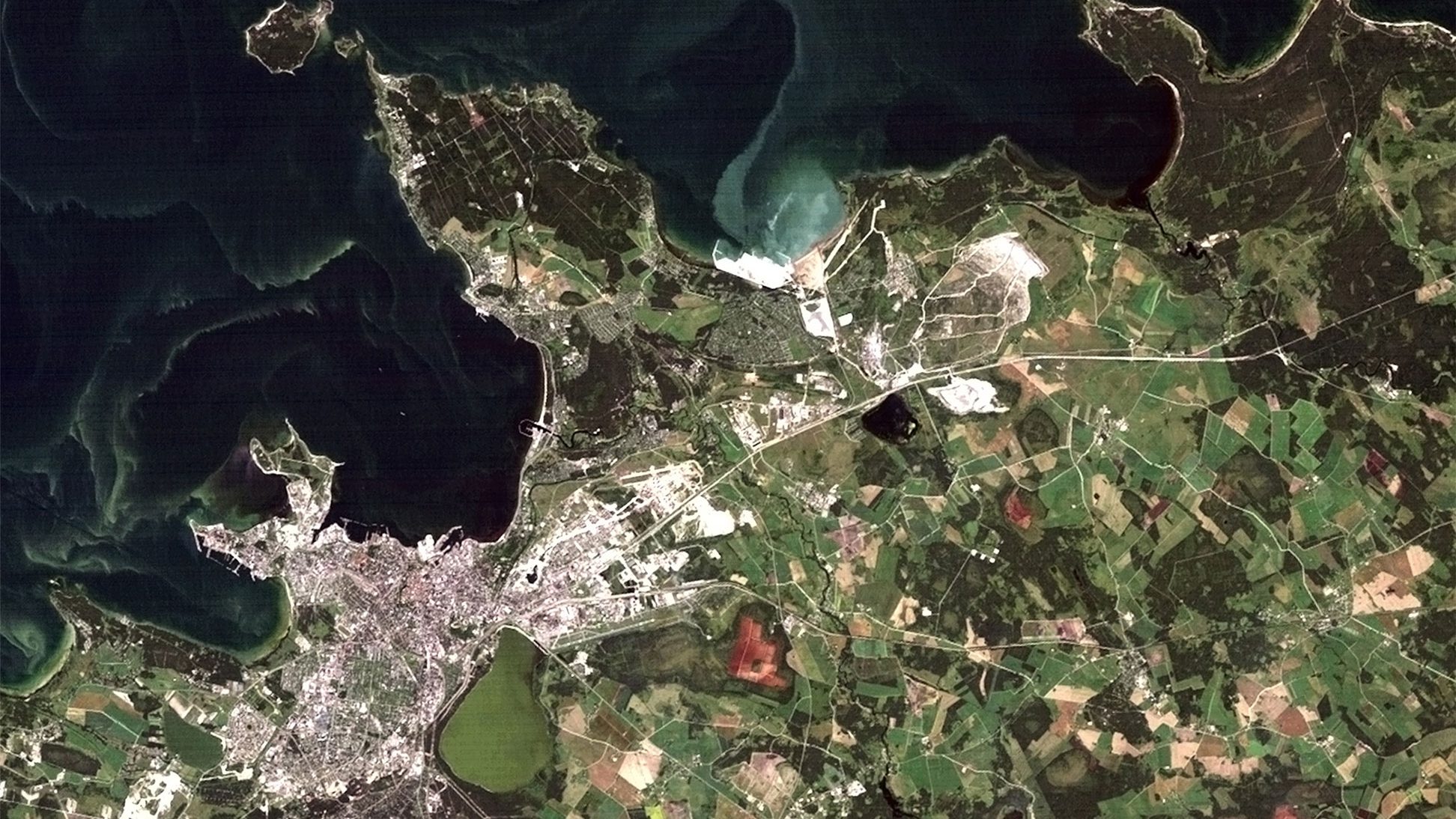
Example image. Tallinn and surroundings. wwwearth.esa.int
Epílogo / Epilogue
No estaba en los planes de nadie que en 2020 la pandemia covid-19 muestre a todos nosotros lo vulnerables y frágiles que somos como sociedad, incluso en el siglo XXI. La cuarentena a nivel mundial ha hecho que pensemos sobre las dinámicas sociales, culturales, económicas y política que tenemos en la actualidad, y también sobre como nuestras vidas inevitablemente cambiarán, mucho o poco, en el futuro próximo. Es un momento de reflexión sobre nuestras ideas, nuestras decisiones, nuestras acciones, nuestras obras, y sus significados. El mundo seguirá adelante y seguramente seguiremos construyendo ciudades y edificios, pero ¿serán estas las mismas obras de antes representando nuevos discursos? o ¿serán diferentes obras representando los mismos discursos antes de covid-19? La propuesta curatorial ¿Qué arquitectura estonia? apuesta a que estas preguntas sean parte importante de la discusión en Tallin en 2022.
It was not in anyone’s plans that in 2020 the covid-19 pandemic would show all of us how vulnerable and fragile we are as a society, even in the 21st century. Global quarantine has made us think about the social, cultural, economic and political dynamics we have today, and also about how our lives will inevitably change, a lot or a little, in the near future. It is a moment of reflection on our ideas, our decisions, our actions, our works, and their meanings. The world will go on and we will surely continue to build cities and buildings, but will these be the same works as before representing new discourses? Or will they be different works representing the same discourses before covid-19? The curatorial proposal What Estonian architecture? He bets that these questions will be an important part of the discussion in Tallinn in 2022.
 Oscar Aceves Álvarez